A Farmer’s Perspective on the Cost of Keeping Equipment Longer

By Kristen Faber
Published on August 12, 2026

Fifteen years ago, replacing equipment was a much easier decision than it is today. Equipment prices have increased, financing costs have changed, and the overall cost of ownership looks much different than it once did. As a result, more producers are choosing to keep equipment longer and manage the risks that come with long term ownership.

That is exactly why Jake Bryce wanted to have a conversation with Brannon Lange, a farmer near Glenwood, Minnesota. Brannon farms approximately 4,000 acres of corn and soybeans, depending on the year, and runs 150 head of cattle. His family’s operation is located just a mile, as the crow flies, from where Jake grew up.

Brannon’s family has spent more than 50 years helping agricultural producers manage risk through crop insurance and other insurance products. As Machinery Scope was developing its equipment protection programs, Jake wanted honest feedback from someone who lives these decisions every day.

During a conversation in Brannon’s shop, one comment immediately stood out.

“Nobody seems to be in an equipment rotation anymore.”

Brannon went on to explain that years ago it was often possible to trade equipment much more economically, particularly when multiple machines were involved in a fleet purchase. As equipment values and ownership costs have changed, those opportunities have become much less common. The economics have changed for both farmers and dealerships. For many operations, the conversation has shifted from replacing equipment on a regular cycle to finding ways to confidently own equipment longer.

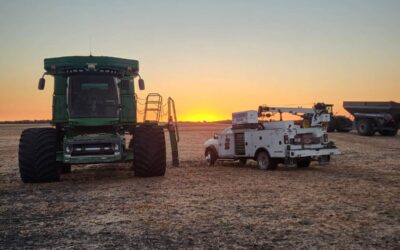
Brannon shares why he chose to protect several of his machines with Machinery Scope coverage, including the John Deere 8R featured in the video. Like many producers, he still expects to handle normal maintenance and routine repairs himself. His goal is simply to protect his operation from the major mechanical failures that can quickly turn into unexpected repair bills.
The conversation is not really about warranties. It is about maximizing your return on investment and mitigating some of your biggest risks.

Every operation is different. Some producers will continue to replace equipment on a regular schedule. Others will choose to extend ownership and maximize the value of the equipment they already own. Neither approach is right or wrong. The key is understanding the costs, the risks, and making the decision that best fits your operation.

That is where Machinery Scope comes in. Our goal is to help producers confidently make the ownership decision that is right for their operation by reducing the financial risk of major mechanical failures no matter their equipment strategy.

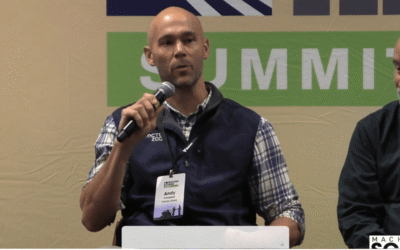
Watch the video to hear Brannon’s perspective on equipment ownership, managing risk, and why he believes extended coverage has become an important part of his operation.
More News & Updates

Equipment Extended Warranty FAQs

Having been in the business since 2013, we’ve put together a list of the most commonly asked questions we hear regarding Extended Warranty. If you have a question you can’t find here, please feel free to contact us.

DEFAULT CLOSE
What types of coverages are available?

The parts covered are the main difference between each plan. It is important to review the breakdown of what is covered by each level of protection being offered in the terms and conditions of the coverage.

  • Powertrain: This plan includes the components pertaining to the engine and transmission that oil touches. Our plans will also provide coverage on additional related components.
  • Powertrain+: Covers the hydraulic pumps and valves. In some instances, Powertrain+ will need to be purchased to cover hydraulic drive components, such as factory installed rear-wheels assist on combines.
  • Ultimate: covers several components often found in comprehensive coverage but is not to be considered “full machine” or “bumper-to-bumper.” Covered components include, but are not limited to emissions components, starter, alternator, engine block heater, ac compressor, factory installed auto steer, front axle suspension, ROPS and FOPS.

We are always happy to talk through the details of the different solutions that we can offer so that you have the information and full transparency to decide what is best for your operation.

What are the benefits of having extended warranty on my equipment?

There are numerous reasons why having an extended warranty plan might make sense for your operation. Besides being a risk management tool on your operation, having extended warranty remaining on used equipment will translate to improved resale value. For example, we estimate that used equipment with at least one year and 250 hours of coverage will have improved resale value between 1% and 5%. For dealerships, equipment that has coverage will sell more quickly than those that do not (assuming everything else being equal).

Most importantly, an extended warranty plan can save you from the financial burden of a major repair bill. Extending the protection on your equipment provides peace of mind by helping to turn an unknown variable cost into a known fixed cost.

What are the key differences between all the companies that offer coverage?

Most OEM’s offer some type of coverage. There are also independent providers, such as Machinery Scope, that offer coverage for a wide range of equipment types, makes, and models of equipment. We are proud to offer our solutions to equipment dealers so that we can protect their mainline offerings as well as competitive trades. Machinery Scope is also proud of being deeply rooted in the equipment industry, both in our farming operations and within the equipment dealerships. Our roles within the equipment dealership have included, sales, sale management, operational management, service technician, and service management. We understand this business and we are proud to leverage that to make it easy for our dealers and their customers to do business.

Another key distinction from one program to the next is how the programs are financially supported. Programs can be fully insured, reinsured, bonded, or backed by the financial strength of the administrator and/or the company offering the policies. Additionally, commercial extended service contracts are regulated differently by each state. Certain terms, products, and or programs will vary from state to state. It is not unreasonable to ask questions. At Machinery Scope, we administer the plans we provide and are proud to be backed by CNA to provide you with a product that you can count on when you need it most.

What factors determine how much my plan will cost?

As you can imagine, the cost of the coverage varies. This will depend on the following factors:

  • Age of the equipment
  • Current hours
  • Type of equipment
  • Horsepower
  • Usage
  • Prior claims history on that model (or series)
  • Requested Years of Coverage
  • Requested Hours Per Year
  • Coverage Type (Powertrain, Powertrain+, or Ultimate)
  • Deductible